Memory and legacy
Dr. Pedro Jorge dos Santos Pinto
Civic Association
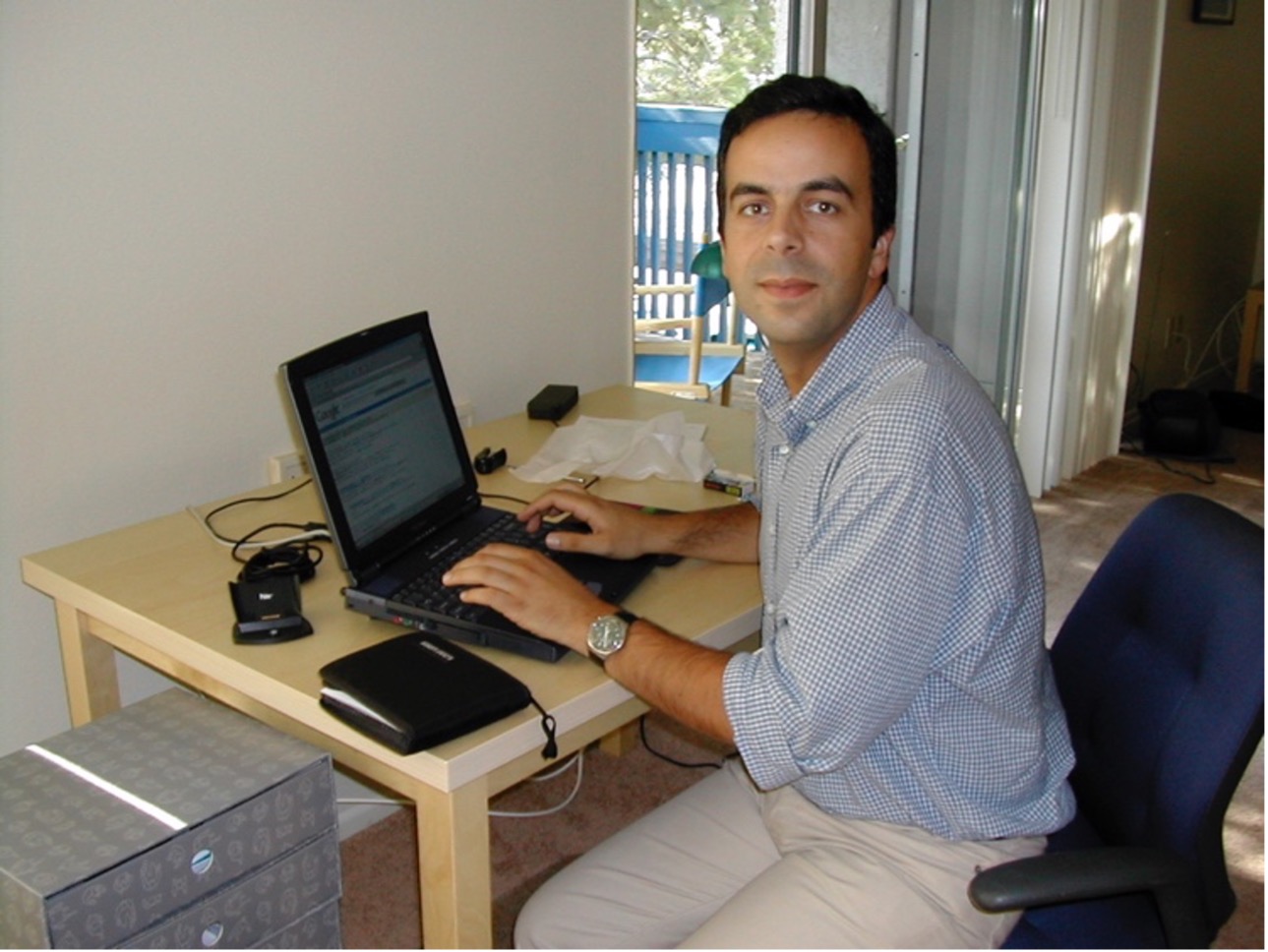
Who was Pedro
Pedro Jorge dos Santos Pinto was born on July 26, 1968, and died on October 11, 2004.
He approached his profession with intensity and rigor. As a student, he was never satisfied with learning only what was required to qualify as a doctor. He always sought to go further, understand more, and delve deeper. During his degree, he served as a teaching assistant in Cell Biology, where he also pursued research—not out of obligation, but out of genuine intellectual curiosity.
During his specialist training, he looked beyond the excellence of Hospital de São João. He completed a six-month fellowship in San Diego, California, and later returned as a medical specialist for another year, determined to take his practice and knowledge to new heights.
He presented papers several times at the world-renowned Radiological Society of North America (RSNA) conference in Chicago, repeatedly winning awards. At the time, Portuguese research was not commonly submitted to international meetings of this scale and importance. In the words of some colleagues, although his life was cut short, he was one of the people who contributed most to the advancement of radiology in Portugal during his lifetime.
But Pedro wasn’t just that—and perhaps that was not even what defined him most.
Discreet and exceptionally intelligent, he had varied interests and a curious view of the world. He traveled extensively at a time when travel was not yet commonplace, visiting several countries for training and conferences. He learned languages with almost bewildering ease. He loved music and was a loyal listener to Rádio Nova and the now-defunct XFM. He left behind a music collection that still feels remarkably current.
Always attentive to new developments, he was among the first to embrace digital photography and the iPod, which he quickly filled with music. He experimented constantly with photography and left behind images of a quiet, singular beauty. He had a distinctive aesthetic sensibility; his home offered one of the most breathtaking views over Porto, but, above all, it reflected his way of seeing.
He was, in the deepest sense of the word, a doctor in the tradition of Abel Salazar: someone who understood that “a doctor who knows only medicine knows nothing even about medicine.” His culture, curiosity, and sensitivity were as much a part of his clinical practice as his technical knowledge.
And yet, all of this says little about what mattered most.
Pedro was a lot of fun. He had a fine, biting, and unexpected sense of humor, with an extraordinary ability to laugh at himself and share laughter with others. He never took himself too seriously, which made his intelligence seem even brighter. Being with him was effortless: there was laughter, irony, and a clarity that could puncture solemnity and vanity with a short phrase, often delivered casually, as if it were nothing.
He was affectionate in his own understated way, radiated tranquility, and made us feel lighter simply by being there. His presence had that rare quality: it never overwhelmed; it quietly brought light.
There was also a quieter, and perhaps more constant, dimension to him: profound love, admiration, and absolute devotion to his family, especially his mother. He was a daily presence—even from afar—marked by care, respect, and tenderness, without fanfare but with a loyalty that spoke volumes about his way of loving and being in the world.
Describing Pedro as brilliant is accurate—but it falls short. He was brilliant, yes, but above all he was lightness, humor, a lively intelligence, and a unique way of being in the world that made everything feel easier to breathe.
The Association
We created and maintain this Association to promote the values Pedro quietly embodied throughout his life, leaving a deep and lasting impression on those fortunate enough to know him.
News
VivaCidade newspaper, issue 244, September 2026
ESG and Associação Cívica Dr. Pedro Pinto create Excellence Award
News report on the creation of the Prémio de Excelência Dr. Pedro Jorge dos Santos Pinto, in partnership with the Escola Secundária de Gondomar.